

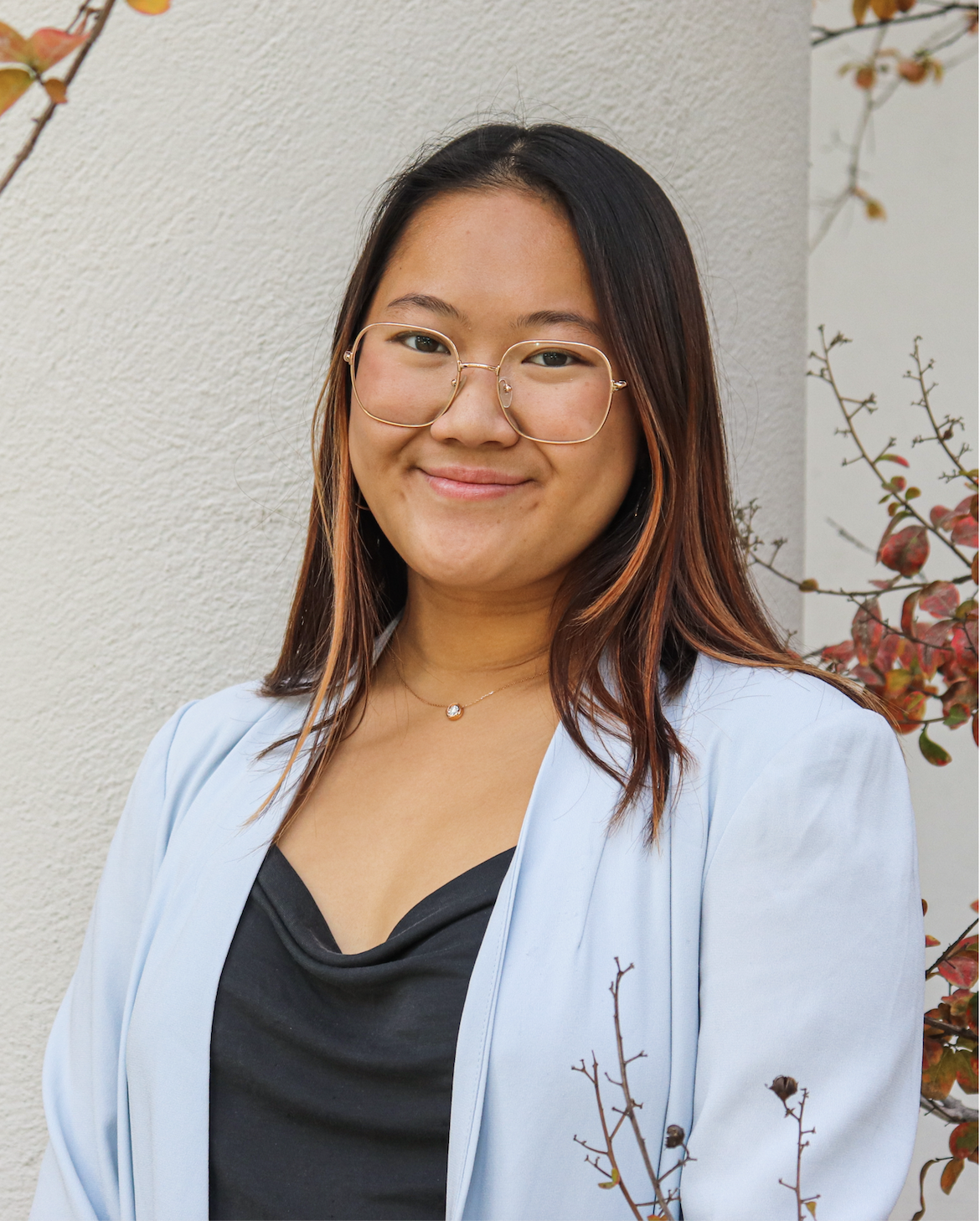
Angel Yuan (she/her) hails from Vancouver, Canada and is a rising senior at Pomona College majoring in International Relations and French. She is particularly passionate about AAPI empowerment, language accessibility, and advocacy for all marginalized communities. Angel is a passionate language learner—she recently embarked on a journey to learn her fifth language, Arabic—and hopes to use her language skills for good. In her free time, Angel enjoys cafe-hopping for the best matcha lattes, rewatching her comfort show Brooklyn Nine-Nine, and playing the New York Times puzzles.
Internship Placement: Asian American LEAD
As a CAPAL scholar/intern, what does CAPAL mean to you?
To me, CAPAL epitomizes opportunity. Through CAPAL, I have the opportunity to expand my network of AAPI leaders, the opportunity to develop my advocacy skills, and ultimately, the opportunity to have a seat at the table. It is crucial to ensure that AAPIs have a meaningful seat at the table, where our voices are heard, valued, and integrated into the policymaking process. We must ensure a seat at the table in shaping policies that affect us, advocating for our rights, and creating equitable access to resources. With that being said, simply having representation is not enough. It is also crucial to be allies with other marginalized communities and to uplift all those facing systemic inequalities and injustices. Through CAPAL, I can make tangible contributions towards advancing social equity, justice, and inclusion for everyone, all the while further examining and utilizing my own intersectional identities.

What is an issue or topic within the AANHPI communities that you feel passionate about addressing?
Like many other second-generation Asian kids, I grew up as my mom’s personal translator. From parent-teacher conferences to tax documents, I was expected to translate everything. Language accessibility has always been one of the central issues affecting the AANHPI community, especially among the older generations. The issue stems from a lack of investment in translation services, outreach to inform community members of available translation services, and consensus over what languages should be translated. As a result, marginalized communities are further excluded from crucial resources, especially government welfare programs and non-profit services. In the future, I hope to see an increase in language accessibility for marginalized communities, but beyond that, I hope to see the normalization and valorization of multilingualism, the revival of disappearing languages—especially Indigenous languages across the world—and the perception of language accessibility not as a burden but as a necessity.
What are your main responsibilities at your position? What are some of your big projects?
As a Programs Intern at AALEAD, I help facilitate summer programs for underserved youth in DC. I spend Monday through Friday in person at Jackson Reed High School assisting with workshops and activities, with a field trip every Wednesday. One of my big projects is to create and facilitate my own workshop for the youth, for which I decided to focus on student activism. This workshop will walk students through what activism is, examples of student activist movements in the US, and how they can advocate for causes they care about.

How does this internship fit with your professional and career goals?
Through AALEAD, I have the opportunity to delve into the educational non-profit sphere and further explore my interests in education and youth empowerment. This experience has also introduced me to a potential future in the world of program coordinator, development, and management. Through CAPAL, I have the opportunity to meet and learn from leaders across the public service sector, and especially being in DC during election year, I have the unique chance to be at the heart of US politics. CAPAL has reaffirmed to me why we need people who look like us, share our values, live our experiences, and will advocate for us in the public service space, and I hope to be that voice for others some day. Through my Community Action Project with Stop AAPI Hate, I have the opportunity to further delve into policy research outside a classroom setting.
What does public service mean to you? What sparked your interest or desire to get involved with public service?
What does it mean to have a seat at the table, and how do we ensure that other voices are being invited to the table as well? These are the central questions that have guided my pursuit of a career in public service, whether that be in a governmental office or through community nonprofit work. I aim to advocate for marginalized communities, with a particular focus on addressing our intersectional identities and challenges. My journey in public service began in the nonprofit world, with internships focused on uplifting marginalized voices. My experience with Special Service for Groups (SSG) in Los Angeles exposed me to issues such as affordable housing, equitable health access for queer and unhoused populations, and sustainable agriculture for AAPI communities, all the while cultivating my skills in development and fundraising. My internship with the Alliance for Children’s Rights gave me insight into the legal needs of those in the youth welfare system, most of whom are from black and brown communities, and developed my interpersonal communication skills. Last summer, I was able to formally engage in the intersection between public service and my AAPI identity through the CAUSE Leadership Academy (CLA), a nine-week youth leadership program designed to develop our understanding of AAPI issues, civic engagement, leadership development, and networking. Through CLA, I had the opportunity to intern in a congressional district office, which further sparked my interest in public service, especially in the political realm. Over the years, I have learned that there are a variety of avenues into public service, and regardless of which realm I find myself in, my mission and values stay the same: to create a positive change in other people’s lives, whether that be through direct services or institutional policy reform.