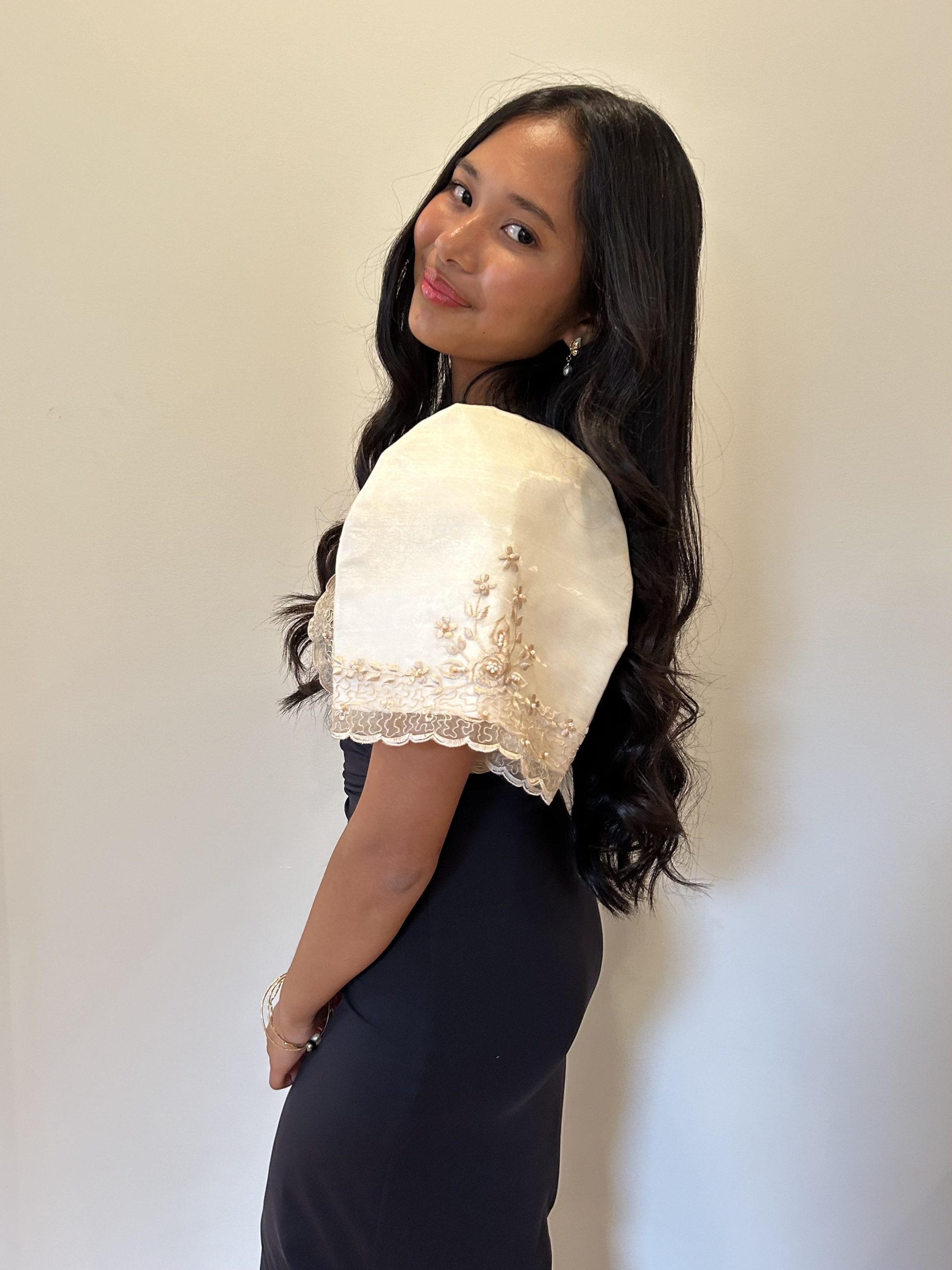

Marissa is a sophomore at Yale studying Ethnicity Race & Migration and Education Studies, passionate about culturally relevant curriculum that fosters critical consciousness and identity empowerment. Born and raised in Hawaiʻi, she’s interested in the intersections between Asian and Pasifika histories and communities. She’s the founder of the Filipino Curriculum Project which introduced Filipino history and culture curriculum to Hawaiʻi schools. At Yale, she’s a member of Kasama, where she led a community effort to introduce Tagalog language classes. This summer, she’s also an IMPACT! Filipino American scholar with the US-Asia Institute. She loves writing, graphic design, and dancing tinikling!
Internship Placement: CAPAL Communications and Marketing Intern
As a CAPAL scholar/intern, what does CAPAL mean to you?
CAPAL is an empowering and collaborative space that fosters productive discussion and leadership cultivation. As a communications and marketing intern, I’m grateful for the creative freedom I had to make the digital platform engaging and educational. I personally enjoyed the Community Action Project, where we collectively took initiative within another AANHPI organization, demonstrating the importance of action-based and team-based learning.
What is an issue or topic within the AANHPI communities that you feel passionate about addressing?
As an aspiring educator, I’m passionate about place-based and community-relevant curricula that contextualizes, critiques and empowers. Education can uplift marginalized stories, build historical awareness, and inspire initiative. Many students raised in Hawaiʻi such as myself have grown up immersed in unique hands-on education; this enriching experience that draws on Indigenous knowledge has lead to my passion for educational advocacy within our local education system, and has affirmed an importance for cross-cultural solidarity. I want the term “AANHPI” to be more than an umbrella label – we need to recognize the distinct and paralleled histories of colonialism, subjugation, and mobilization that still impact us today. As a proud Filipino, I want my community to understand our history and feel seen, which is why implementing my organization’s course – Filipino History & Culture – was so personal for me and many other students since many didn’t necessarily feel that representation in school, despite Filipinos being Hawaiʻi’s largest Asian ethnic group. Education should be restorative and transformative, helping students become leaders and critical and collaborative thinkers.
What are your main responsibilities at your position? What are some of your big projects?
As the CAPAL communications and marketing intern I am also the social media manager, helping to make CAPAL’s digital platform more educational, engaging and inspiring! Most importantly, I get to help highlight all of our amazing other scholars and interns; their perspectives, insights and backgrounds never fail to inspire me with how passionate and dedicated they are.

How does this internship fit with your professional and career goals?
My dream is to be an educator, specifically one that is knowledgable and celebratory of all cultures, histories and perspectives, to better serve my students and communities. CAPAL’s focus on AANHPI identity and leadership is one that I value, systemically and personally. Growing up in Hawai’i as a Filipina with an immensely different perspective of my identity and what Asian, Asian American, Native Hawaiian and Pacific Islander means, I now gain valuable insight into the discussion of “AANHPI” in another environment, and more on a national level. I also have discovered an interest and love for educational nonprofit work and graphic design, which I now view as a creative outlet and way to engage, educate, and uplift content and stories.

What does public service mean to you? What sparked your interest or desire to get involved with public service?
Public service means everyone brings their passions and knowledge to the table to contribute to a more equitable and representative society. It should be community-based, actively ensuring that all needs and voices are heard and historical context and cultural dialogue is incorporated. My passion for education has helped me explore avenues such as educational nonprofit-work and educational/research policy, showing me there are ways to make direct impacts on the communities I want to empower through a combination of education and public service.